

Getting portions right is the single most important part of feeding any dog. Too much food, and weight creeps on; too little, and energy and coat quality suffer. This guide pulls together everything we've learnt from veterinary nutritionists, dog trainers and thousands of UK owners who feed our recipes every day. Work through it once, bookmark the tables, and you'll never have to guess at mealtime again.
Step 1: Choose the Right Recipe
Match the recipe to your dog's life stage, size and any sensitivities:
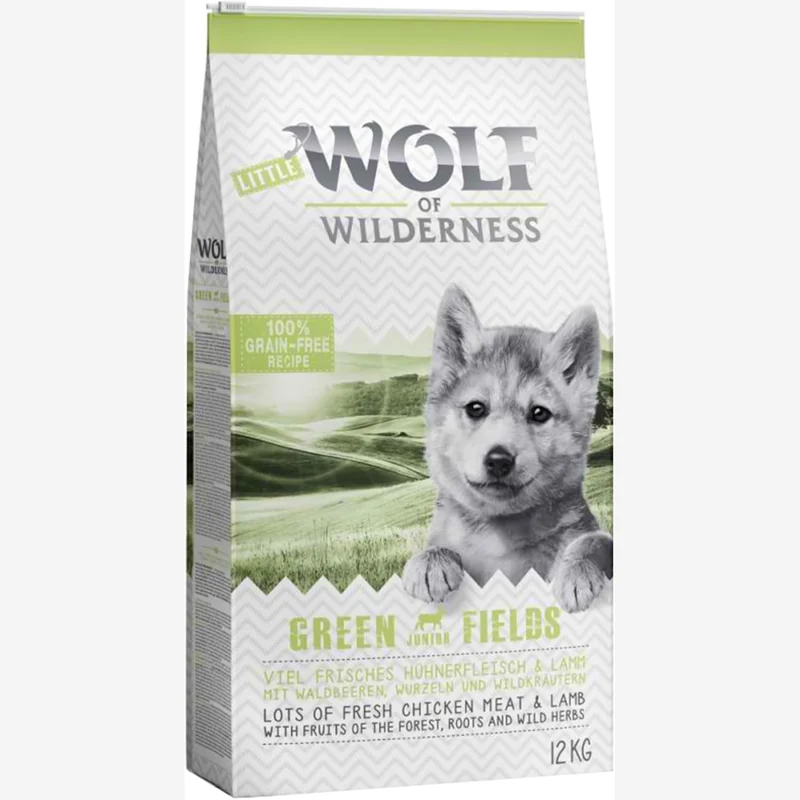
- Puppy (under 6 months): our puppy range — higher protein, balanced calcium
- Junior (6–18 months): our junior range — bridging puppy and adult
- Adult (1–7 years): our adult dry range or soft pouches
- Senior (7+ years): often the adult range, with a higher share of soft food and soaked kibble
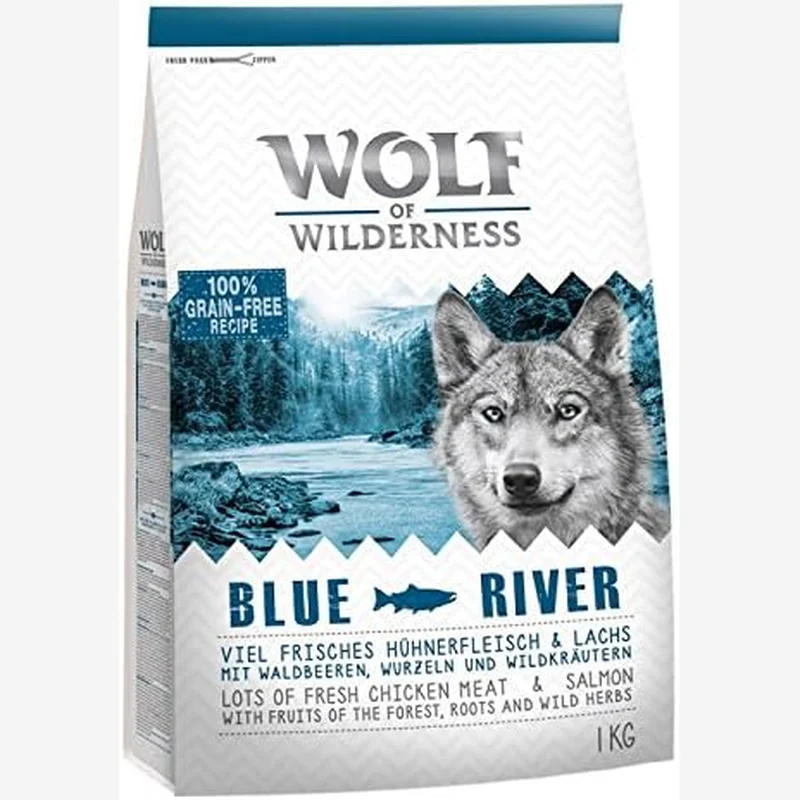
If your dog has had reactions to chicken, rotate to salmon, lamb or duck recipes. If they have pancreatitis history or need weight control, choose our leaner protein options (turkey, salmon) and watch portions carefully.
Step 2: Calculate Daily Portions
The figures below are averages for a healthy adult dog of moderate activity. Adjust up for working or high-drive dogs, down for sofa companions or neutered dogs. Always cross-reference with the printed figures on the specific bag, which account for the calorie density of each recipe.
Dry Food — Adult Daily Rations
| Weight | Low Activity | Medium Activity | High Activity |
|---|---|---|---|
| 5 kg | 70 g | 80 g | 95 g |
| 10 kg | 120 g | 140 g | 165 g |
| 15 kg | 160 g | 190 g | 225 g |
| 20 kg | 200 g | 235 g | 275 g |
| 25 kg | 235 g | 275 g | 325 g |
| 30 kg | 270 g | 320 g | 375 g |
| 40 kg | 340 g | 395 g | 465 g |
Soft Pouches — Adult Daily Rations
| Weight | Pouches per Day (approx.) |
|---|---|
| 5 kg | 1 pouch |
| 10 kg | 1½ pouches |
| 20 kg | 2½ pouches |
| 30 kg | 3½ pouches |
| 40 kg | 4½ pouches |
Step 3: Decide How Many Meals
The rule of thumb is two meals a day for adult dogs, morning and evening. Puppies need three to four meals, reducing to two by six months. Senior dogs often do well with three smaller meals to ease digestion. If your dog is deep-chested (Great Dane, Weimaraner, Boxer), feed slowly in smaller meals to reduce the risk of bloat, and avoid heavy exercise within an hour of eating.
Step 4: Transition Gradually
Any change in diet should happen over at least seven days. Switching suddenly is the most common cause of soft stools, flatulence and fussy eating after a new food arrives. Use this pattern:
- Days 1–2: 75% old food, 25% new
- Days 3–4: 50/50 split
- Days 5–6: 25% old food, 75% new
- Day 7+: 100% new food
If any stage causes upset, hold at that ratio for a few extra days before progressing. For very sensitive dogs, extend the transition to 14 days.
Step 5: Check Body Condition Monthly
Weighing your dog is useful, but body condition scoring is more reliable. A dog at an ideal condition has:
- Ribs easy to feel but not sharply visible
- A clear waist when viewed from above
- A visible tuck at the abdomen when viewed from the side
- A smooth, not fatty, topline
If your dog is carrying extra weight, reduce the daily ration by 10% and reassess after four weeks. If ribs feel prominent and coat feels thin, add 10%.
Mixed Feeding: Dry and Soft Together
Many UK owners combine our dry kibble and soft pouches. This offers the dental and satiety benefits of kibble with the hydration and appetite-stimulation of pouches. A practical approach:
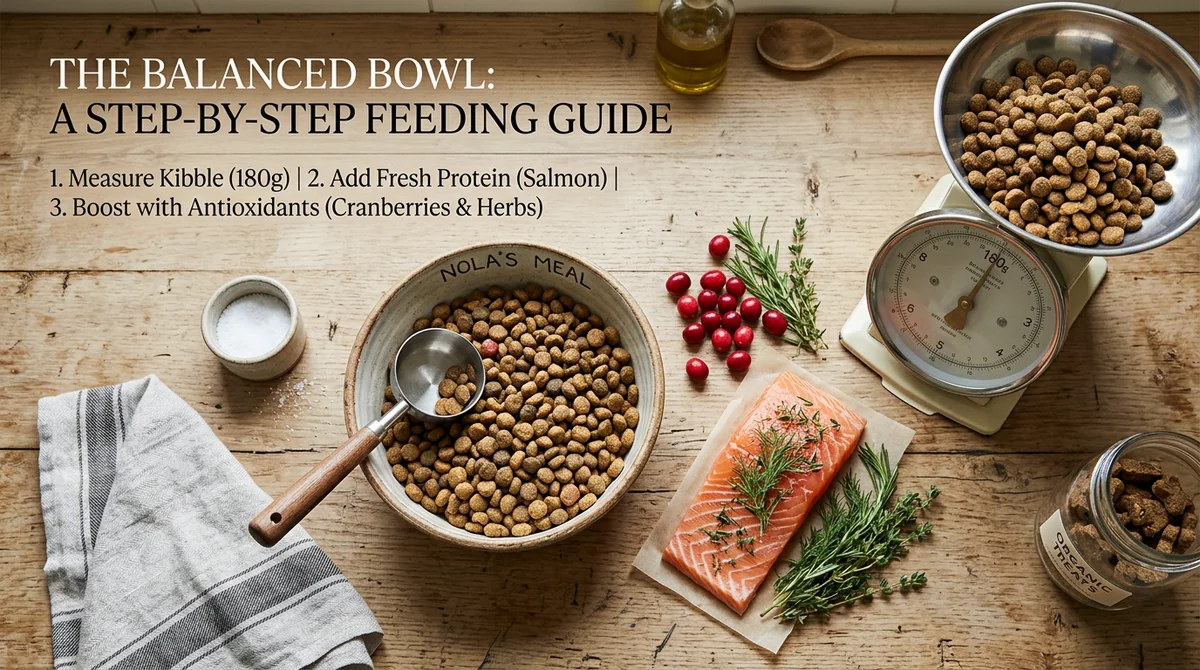
- Measure the dry portion using kitchen scales
- Reduce it by roughly 35 g per pouch added
- Stir the pouch through the kibble for aroma and flavour
- Serve at room temperature
Common Mistakes to Avoid
- Using a measuring cup by eye — always weigh with a kitchen scale
- Forgetting to account for treats — subtract treat calories from the daily ration
- Changing food suddenly — always transition over at least a week
- Free-feeding — leaving a full bowl out all day encourages overeating and fussiness
- Ignoring water — always provide fresh water, especially with dry food
Questions Owners Often Ask
Can I feed a raw and kibble mix?
Yes, many owners do. Raw and kibble digest at different rates; some dogs tolerate this better if meals are separated by a few hours. Discuss with your vet if your dog has a sensitive stomach.
How long does an opened bag stay fresh?
Up to six weeks when stored in a sealed container in a cool, dry place.
What if my dog refuses the new food?
Try warming a pouch over the kibble, reducing the transition pace, and skipping one meal so genuine hunger takes over. Fussy eating usually passes within 3–5 days.
Start with Confidence
A well-chosen recipe, correctly portioned and thoughtfully introduced, transforms a dog's week within a fortnight. Use this guide as your reference, and let our owner reviews show you what to expect next.