

The dry range is the heart of the Wolf of Wilderness catalogue, and for most owners it is the first recipe they try. Kibble is easy to store, lasts well once opened, supports dental health through its crunch, and offers the best price-per-meal of any format. It's also the range with the widest selection of protein sources, grain-free carbohydrates and regionally inspired recipes — so there is a formula for almost every dog.
What Makes the Dry Range Different
The headline figure is simple: 41% to 61% fresh meat, depending on the recipe. "Fresh" means whole muscle and meaty cuts delivered to the factory and included before cooking, not rehydrated meal. Fresh meat retains more of its natural nutrients and amino-acid balance, and dogs detect the difference immediately — tails wag faster and bowls empty quicker.
The next ingredient by volume is usually potato. Potatoes are an easily digested, low-allergen carbohydrate that supplies slow-release energy without the gluten concerns of wheat, barley or rye. We avoid maize and soya entirely. Instead, nature's pantry fills in the gaps: dandelion root, nettle, yarrow, fennel, linseed, chicory, salmon oil and a signature blend of forest berries.
Signature Recipes in the Dry Range
Classic Adult — Fresh Chicken
Our entry-level adult recipe built around 41% fresh chicken. Chicken is easy to digest, broadly tolerated and suits most healthy adult dogs. Expect a moderate fat profile (around 15%), making it a sensible everyday choice for medium-active dogs of all sizes.
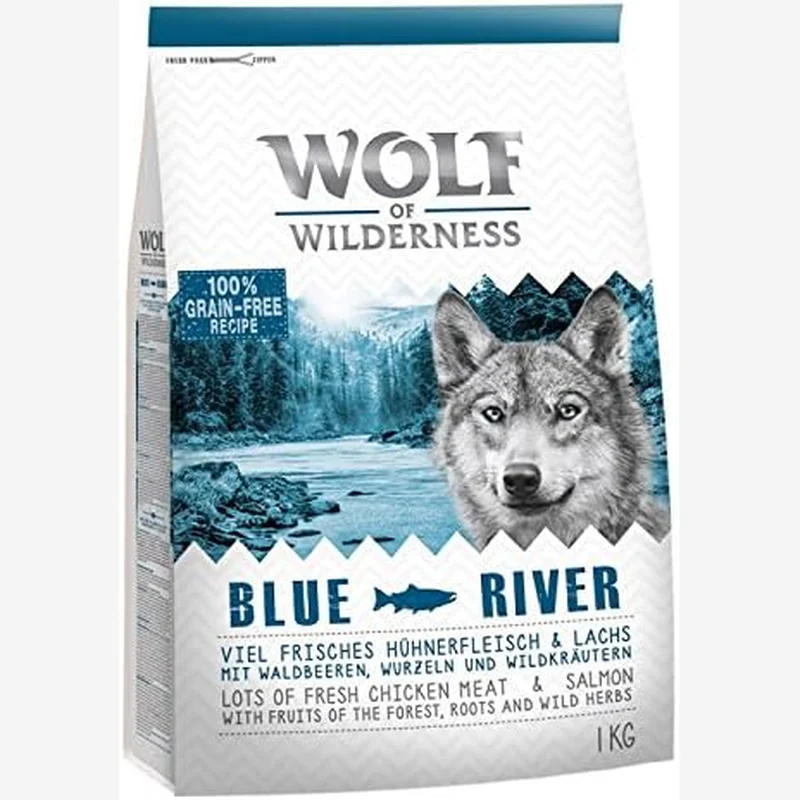
Blue River — Salmon
Inspired by clear, cool northern rivers, Blue River features fresh salmon with a generous helping of omega-3 fatty acids. Excellent for dogs with chicken sensitivities, for coat and skin health, and for dogs with joint concerns. The subtle fishy aroma is often irresistible to picky eaters.
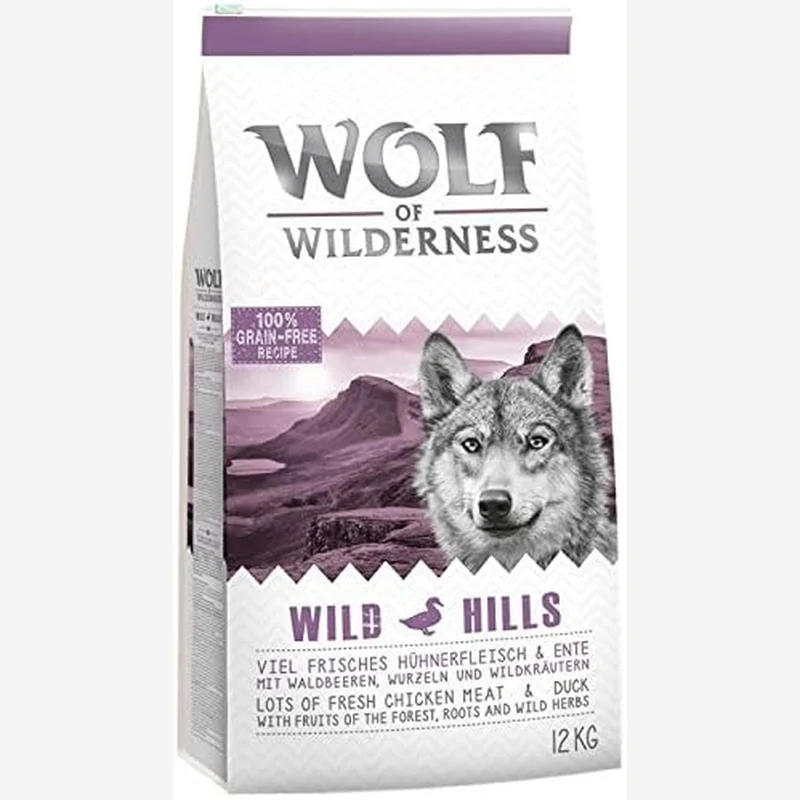
Wild Hills — Duck
A novel protein for most dogs, duck can be an elegant option when owners want to rotate proteins or when a dog has already been exposed to chicken allergens. Rich, aromatic and easily digestible.
Green Fields — Lamb
Pasture-reared lamb sits at the centre of this recipe, delivering iron and B-vitamins. A sound choice for active breeds that need slow-burning energy, and often recommended for dogs whose skin reacts poorly to poultry.
Wide Acres — Turkey
Lean turkey gives a lower-fat profile suitable for dogs prone to weight gain or recovering from a heavier diet. Gentle, aromatic and easy on the stomach.
The Taste Of — Regional Blends
The "Taste Of" sub-range takes inspiration from landscapes: the Canadian wilderness, Scandinavian fjords, the Mediterranean coast. Each blend layers regional proteins (bison, elk, venison, turkey) with matching botanicals to create distinctive flavours. These are favourites for rotation feeding and for owners who want variety without switching brands.
What's Left Out
- No wheat or gluten — ideal for dogs with cereal sensitivities
- No soya — often a hidden trigger for itchy skin
- No sugar — dogs do not need added sweeteners
- No artificial colours, flavours or preservatives — only natural tocopherols
Every bag lists each inclusion transparently. If an ingredient isn't on the label, it isn't in the bag.
Who the Dry Range Suits Best
Dry food is an excellent everyday choice for the majority of adult UK dogs, but some situations call for specific formulas. Active breeds (spaniels, collies, Labradors, huskies) thrive on the higher-meat recipes (55–61%). Small and toy breeds benefit from the mini kibble shape available across the Classic and Taste Of ranges. Dogs with known sensitivities should begin with novel proteins like duck, lamb or salmon, and avoid chicken recipes for the first trial. Older dogs can continue on dry food comfortably when it is soaked in warm water or combined with a soft pouch.
How to Transition to the Dry Range
Switching foods too quickly is the most common cause of upset tummies. Spread the change over seven days, progressively replacing the old food with the new. A simple schedule looks like this:
- Days 1–2: 25% Wolf of Wilderness, 75% previous food
- Days 3–4: 50% Wolf of Wilderness, 50% previous food
- Days 5–6: 75% Wolf of Wilderness, 25% previous food
- Day 7 onwards: 100% Wolf of Wilderness
If your dog has a particularly sensitive system, stretch the transition to 10–14 days. Always make fresh water available, observe stool quality, and adjust portion sizes to body condition. Our feeding guide walks through portions by weight, activity and life stage.
Storing Dry Food Correctly
Dry kibble stays freshest when sealed, cool and dry. Keep the bag folded or decanted into an airtight container out of direct sunlight. Once opened, use within six weeks for maximum palatability. If you buy large bags for a small dog, consider freezing half and defrosting a week at a time.
Ready to Choose a Recipe?
Start with a protein your dog already tolerates, then let the meat percentage guide your choice based on activity. If you're uncertain, our feeding guide pairs breeds, ages and lifestyles with the most suitable formulas. Owner experiences — documented on our reviews page — can also help you shortlist a recipe that has worked for a similar dog.